

30 Mar 30th March 2026
Markets Year to Date
| S&P500 | -7.0% |
| Nasdaq | -9.2% |
| Aussie ASX200 | -2.9% |
The war drags on and everyone is speculating how it will end. Which is a pointless waste of time because no-one knows.
As an investment newsletter all I try and speculate on is how asset prices are likely to change. There are a number of scenarios and we just need to decide which is most likely.
Today, Oil is back up to $115 after a $10 jump over the weekend. But stock futures are little changed.
As you will have seen me write, the only concern is a structurally higher oil price leads to recession. Which got me thinking about US recessions and what causes them.
I had to dig into the distant past of my memory as I realised the US has not had a recession for 16 years (I am ignoring the technical 3 month covid recession as it didn’t last long enough to register).
In the past 16 years, the US economy has absorbed….
- 2011 Greek Debt Crisis
- 2018’s Q4 Fed interest rate mistake
- Oil price shock in 2022 from Russia/Ukraine war
- 500 points of rate rises in 2022-2023
- The 2025 tariff shock
- Probably other things I fail to remember.
The point being, it takes a lot to push the US economy into Recession and we are a long way from that here.
I think the market has started to realise this and that is why we trade at a historically high PE of 20x despite being in the middle of a war.
The S&P500 is down 7% so far this year. Hardly anything to panic about. The Nasdaq is down more (-9%) but this is a more volatile index so is to be expected.
I went looking for signs from the Credit markets that recessions was getting closer and couldn’t find any.
This chart is B rated credit (the rubbish stuff) compared to 30yr Treasuries (considered risk free).
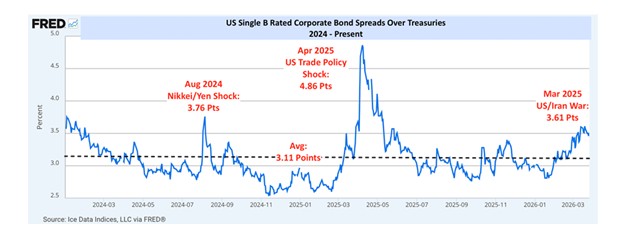
If credit markets get spooked this spread reacts quickly. You can see the spike in 2024 caused by concerns the Yen carry trade (source of cheap funding) was coming undone. You can see the spike caused by tariff day in April 2025. And you can see the move higher this year on the far right.
You will note the move due to the Iran war is not as violent or as significant as the other two moves.
Which tells us the credit markets are not concerned at all. And that means we shouldn’t be either.
Stocks are starting to look cheap. Well, if not cheap, then certainly cheaper.
The biggest change so far is markets have gone from expecting 2 Fed interest rate cuts this year to none. This impacts smaller companies the most who rely on cheap funding to stay in business.
At this stage you are probably better off sticking with the big names.
Here is one that looks attractive now
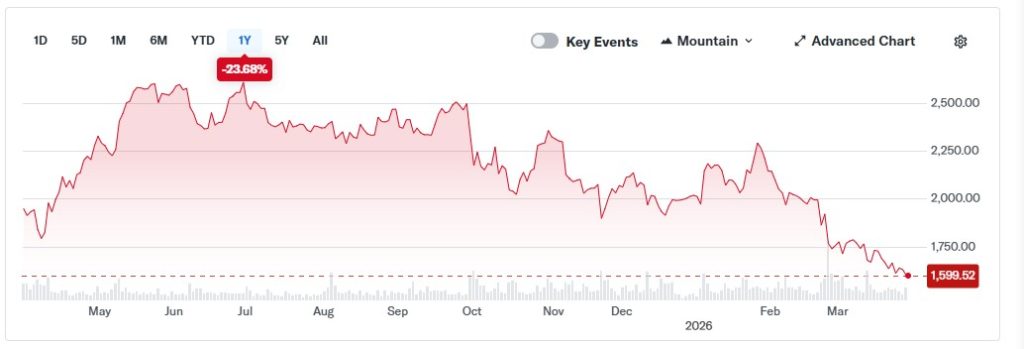
MercadoLibre (MELI)
Mercadolibre is the Amazon of Latin America. But it is also the PayPal of Latin America. Morgan Stanley pointed out it is fast becoming a one-top fintech provider.
It gets 77million active buyers (which increased 26% in the last year alone) and is starting to roll out a whole suite of products to them to capture more revenue per user (like a digital wallet, insurance and wealth management).
Q4 revenue surged 45% Y/Y to $8.8 billion. This company is growing fast.
Yet its stock price is off close to 40%. A bargain right now.
Warning
Stock values can go down as well as up. It is possible to lose 100% of your investment in a stock. Any advice given by Capital 19 is general advice only and does not take your personal circumstances into account and might not be suitable for you.